

Hi, we are just back from a reconnaissance to the southern side of the National Park. We first visited Rushaga outpost, where a new family of mountain gorillas (called the ‘Nshongi’ group) has been habituated and will soon be open for trekking. Tibenda, one of our field assistants who has worked for many years with mountain gorillas, is based here for 3 months; he is training park rangers in identifying individual gorillas of the Nshongi family and proudly told us that they have named 27 of the 34 gorillas already (yes, Nshongi is a very large group). Rushaga’s parks edge location, is very scenic, with dense dark forest covering the steep slopes and apparently several waterfalls and a hot spring to be visited.
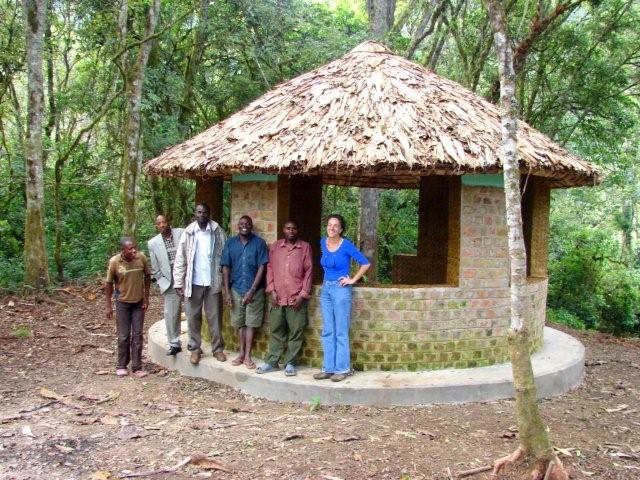
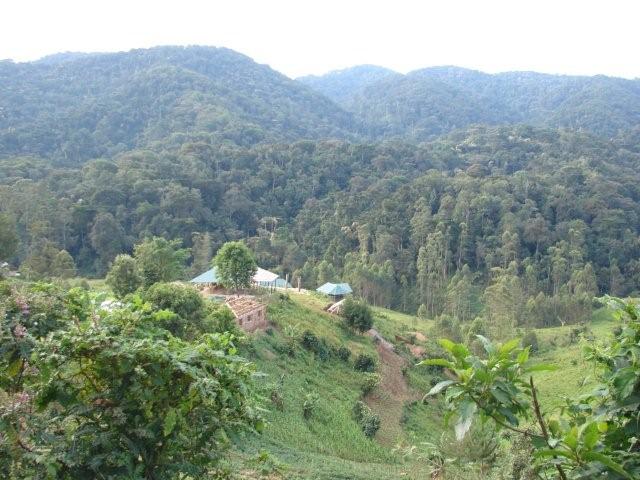
We then continued with the rough but awe inspiringly beautiful drive westward to Nkuringo, a village that has been offering mountain gorilla trekking for a few years already. Just around sunset we arrived at the campsite where we would spend the night. But we had actually been travelling with a Nkuringo resident, former ITFC field assistant and now chairman of the Nkuringo Community Development Foundation (NCDF) – himself an example of ITFC capacity building. He insisted on taking us to ‘their lodge’, and introducing us to the manager. Despite being tired from the journey, we were curious and went along, as we had heard of this unusual initiative; a local community organization owning an upmarket eco-lodge managed as a limited-term concession by a private company, but from which considerable revenue is derived for community activities.
Nothing had prepared us for the stunning 5-star lodge, with what must be one of the best views on this planet. Strategically located at 2100 meter altitude, all the Virunga Volcanoes in Uganda, Rwanda and Congo were in view from the main lounge as well as from the dining area and guest rooms (the active Nyaragongo volcano was even casting a red glow against the clouds at night).
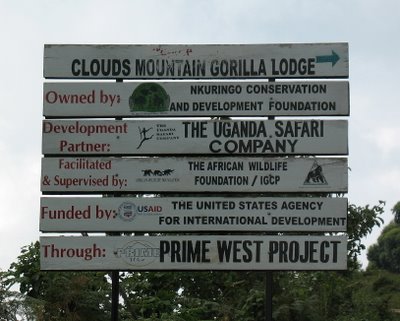
The ‘Clouds Lodge’ was built and is run by Wild Places Africa. Most of its staff are local residents and are being trained by the manager,Gary Segal, to give high standard personal service to tourists who pay for the privilege. A training and capacity development plan is in place to ensure that after 15 years, the company can withdraw and hand-over all management to the community.
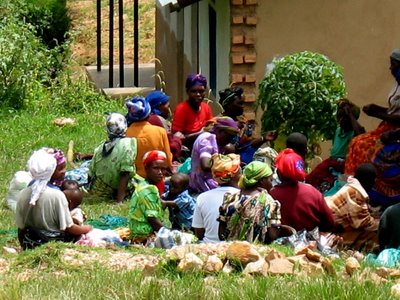
The lodge only started operating 7 months ago, but has already earned the NCDF thousands of dollars. The NCDF receives 30 U$ per night for each guest. Members vote to decide which community projects will be supported by this income. There is quite some spin-off from this enterprise as well, through locally bought produce and increased employment. Generous guests have also donated additional funds for school fees or for supporting other specific projects.
Initial developments and agreements were facilitated and sponsored by the African Wildlife Foundation AWF the International Gorilla Conservation Program IGCP while USAID helped finance it through its ‘Wild West’ program. Bwindi’s park management (UWA) supports the initiative by reserving 6 of the 8 gorilla permits for NCDF bookings. They all work from the conviction that the people who live closest to the park boundary deserve extra support, as they were paying the price of crop raiding by wild animals from the forest, including gorillas (see Douglas’s blog of 22 May for more on this).
Many approaches to improving livelihoods have been tried in the region. This links to conservation because it is hoped that this will reduce conflict between people and the park. The challenge remains to find sustainable solutions, or those which at least last longer than a limited term project. In Gary’s eyes, the key concepts to ensure that the lodge and other income generating activities can be taken over by local people in due time are education and capacity building. But this takes time and requires patience from all involved.
We at ITFC face a similar challenge: how to ensure sustainable capacity and support for conservation? Local capacity building, through post graduate student training and collaboration with the park authorities are our answers, but long term activities remain hard to fund.