
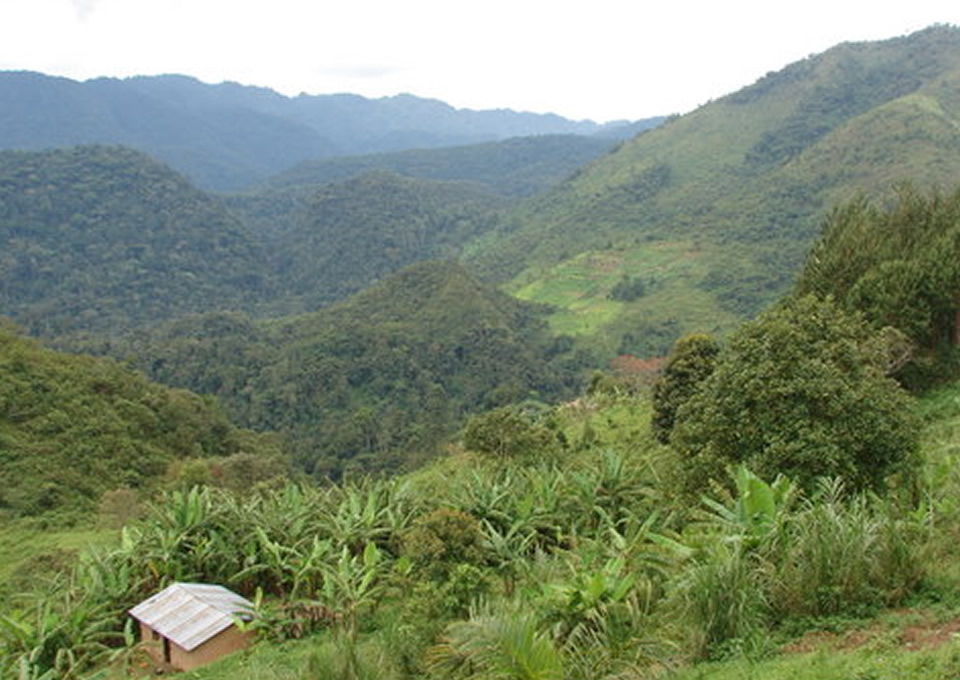
Last week in Nkuringo, on the South West side of Bwindi Impenetrable National Park, we saw firsthand why not everyone feels lucky to have this national park with mountain gorillas. Certainly it is fortunate for Uganda and Ugandan conservation – tourism and associated businesses help the country generate foreign income, while the revenues from mountain gorilla tourism support much of the wider costs of conservation in the country. It is lucky too for all of us who are glad to be able to see wild mountain gorillas. But not everyone feels the same.
Watching our feet on the red mud – it had rained the night before and the strong sun was yet to turn the path to dust once more – we descended through the steep farmland. The thick forest of the National Park on the slopes opposite was getting closer. Men greeted us from zinc roofed wattle and mud dwellings. Women nodded welcomes from beneath large piles of firewood carried on their backs. Small children peeked at us and the braver ones repeatedly tried their limited English ‘hellooo, hellooo’ as we passed.
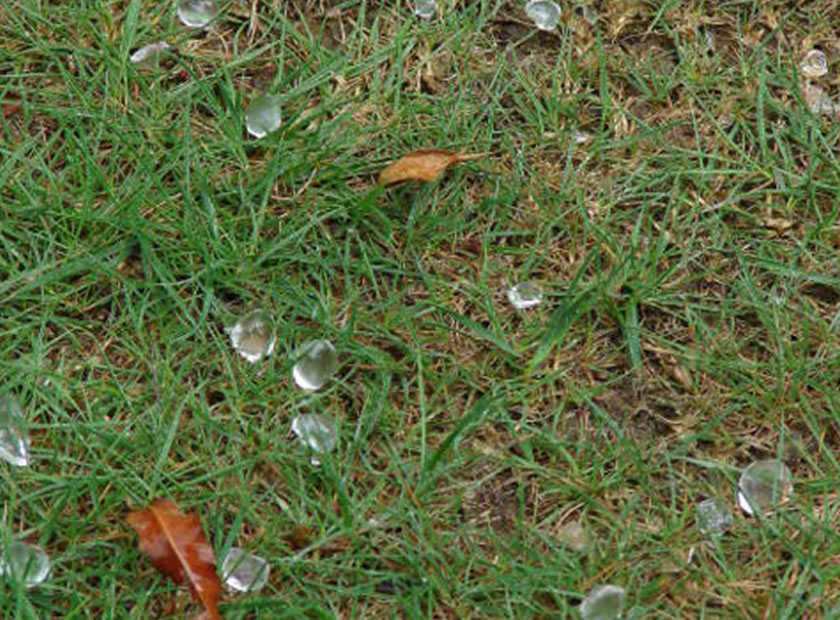
As we started our walk, by the road above, the nearby fields looked well tended. Crops were varied: bright freshly planted millet, beans twining up their stakes, heart-leaved coco-yams, a few potatoes too (these we were told grew poorly). Taller were the many varieties of bananas: those cooked as a starchy vegetable (‘matoke’); those used to make a ‘local beer’, and various sweet types eaten directly as fruit. Rather than the normal large broad green blades most had finely feathered leaves – the result we were told of recent hail storms. Though we are only a degree south of the equator hail is a common problem for farmers at these altitudes.
As we approached closer to the national park the fields became less tidy. Hail was no longer the main problem here. People pointed out the mess of mud, scraped soil and broken plants in fields dug up by wild pigs. We were shown the difference between banana plants destroyed by baboons and those destroyed by gorillas – baboons ate only the fruit, gorillas ate the succulent shoots.
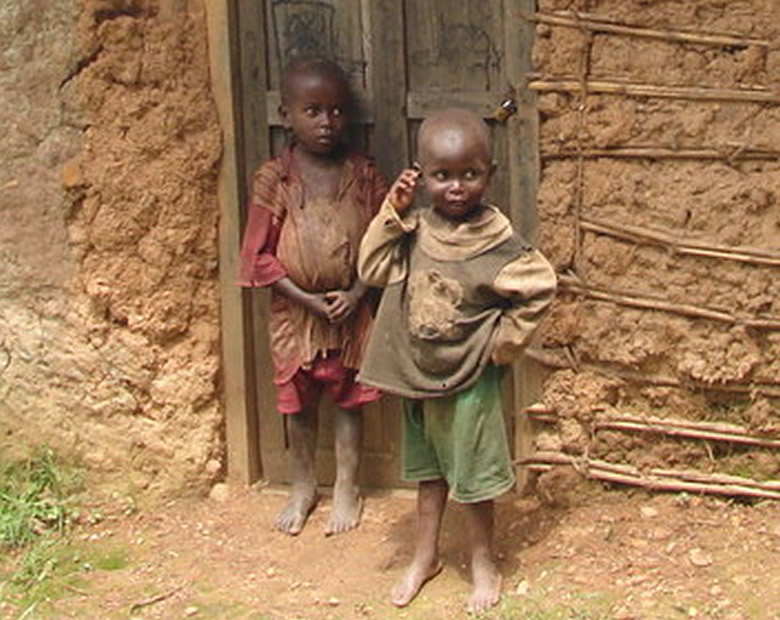
Our local guides also pointed out some broken houses, shuttered huts and abandoned fields; many people have left, as their efforts to grow food were constantly frustrated. For subsistence farmers to abandon their fields and their livelihood … these are not small things.
This, we were told, was all due to the park and its hungry animals. Farming here had always been hard, now it was too hard. Apparently, years ago before the national park, people hunted in the forest and the animals were too afraid to come out. With the park hunting had stopped. Now the animals had become braver and braver, and there were more of them too.
Apparently people do try and scare the animals away but it is not easy and the animals sometime fight back. Pigs tend to damage fields at night and were considered dangerous due to their tendency to charge with great violence when they feel threatened. (Elephants are currently not a problem in this area of the park, though they remain a concern elsewhere).
We met with John, a resilient farmer who still lives at the park edge. He lives in a tiny mud walled two room house with his family. No running water, no chickens (the baboons would steal them) no roads without climbing back to the road we had come from (a steep climb of around 500m (about 1,500 feet). He jokingly tried to sell us his farm for 1 million Uganda shillings (about 500 US dollars) as he showed us around. He wanted to buy land elsewhere and move away but he said no-one wanted to buy his land. Knowing that fuel wood was a problem in the region too, we asked if he’d like to grow trees. He replied he’d be happy to grow trees if he still had food for his family, but what would they eat while the trees were growing?
John had been involved in various projects seeking to reduce the conflicts between the farmers and the park’s animals. ITFC, our institute, has been involved in the past too because addressing these ‘problem animals’ has long been a major challenge for conservation and a cause of local conflict. Unfortunately, off-the-shelf solutions remain unsatisfactory – what works in one place fails in another and circumstances change. Currently ITFC is no longer involved in this work as we have insufficient funds – but we were interested to evaluate what we could and should do if this changed.
One project that John showed us had attempted to grow a dense prickly hedge of ‘Mauritius thorn’ as a barrier to problem animals. Now, four years on, the spiky trees grow thick and spiny in some places, catching on our clothes bags and flesh in a convincingly aggressive manner when we passed too close. But, in many places they had failed entirely, or grown so little that they were easily stepped over. In any case, John explained, there were rocky places without soil, and also rivers, where a hedge would not work. His fields remained as open to hungry animals as if he’d set up a sign saying “welcome”.
John was also involved in projects to grow special crops along the park boundary – a 150 m wide area known as the ‘buffer-zone’. Such crops should be worthwhile for the farmers but not for their wild animal neighbors.
But what to grow? Tea is a one possibility, and is grown successfully in other areas, but there is currently no buyer on this side of the park and poor access to the nearest tea-processing factories makes it impractical. People had previously tried growing the medicinal Artemisia (used in anti-malaria drugs) but the planned buyer had disappeared before the crop was harvested leaving farmers with a crop they could not sell.
A recent project has the farmers planting lemon grass. We saw it. It looked healthy and smelt wonderful. So far none has been sold (it will be harvested at the end of the year). John who had been cheerful throughout his tour asked what we thought. He showed his concern … would he, he asked us, be lucky this time, would he make some money? All we could answer for certain is that we sincerely hope he will.
What is the lesson for those of us who want to help? We need solutions for John. More systematic approaches are needed – we should not invest in one solution at a time and gamble on success rather than failure. This is where research can help. We need to learn what works and what doesn’t and provide much needed help to John and many others.
Conservation requires local support. Local people’s costs and suffering are concerns in themselves as well as challenges for long-term acceptance of the park, its animals and restrictions. We need options which allow people to live next to the mountain gorillas and to feel lucky, not unlucky, to be there.
Thanks to everyone for the warm response. Looking forward to hearing from you.
Douglas